
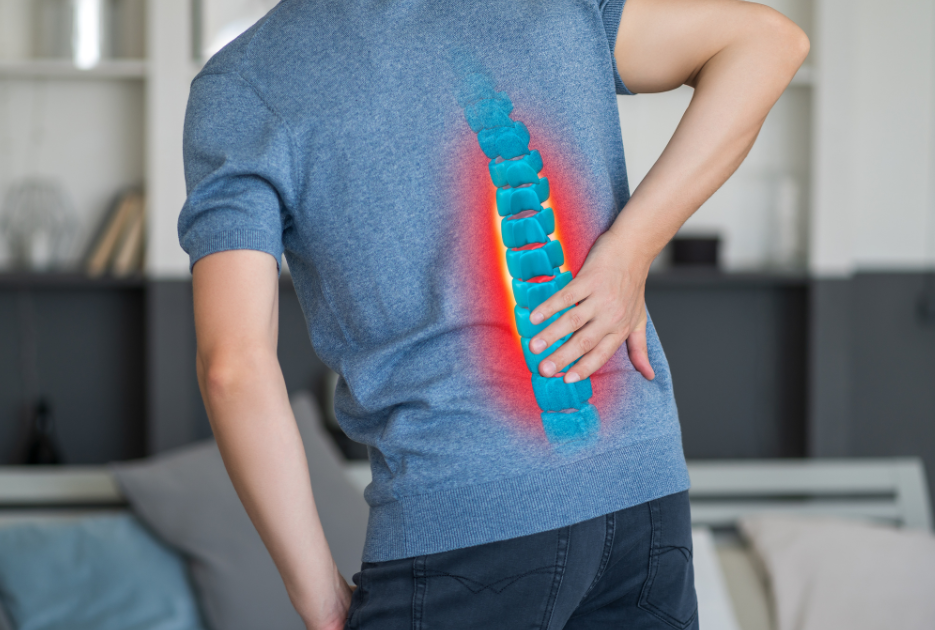
Personalized Care for Bulging, Herniated and Degenerative Disc Problems
Back or neck pain that keeps returning may involve more than tight muscles.
For some people, an intervertebral disc is part of the problem.
At Re-LAX Chiropractic & Wellness in Los Angeles, we evaluate patients experiencing disc pain, disc compression, bulging discs, herniated discs and related nerve symptoms to determine which conservative treatment options may be appropriate.
Our approach focuses on identifying the source of your symptoms and creating a personalized plan rather than simply chasing pain.
What Are Spinal Discs?
Intervertebral discs sit between most of the vertebrae in your spine.
They help distribute forces and allow the spine to move. Each disc contains an outer layer surrounding a softer inner portion.
Over time, repetitive stress, injury, age-related changes or other factors can affect disc structure and function.
Not every disc change causes symptoms. When a disc or surrounding tissue becomes irritated or affects a nearby nerve, however, pain and neurological symptoms can develop.
Bulging Disc vs. Herniated Disc
The terms are often used interchangeably, but they aren’t exactly the same.
A bulging disc generally describes a disc extending outward beyond its normal boundary.
A herniated disc involves displacement of material from within the disc through its outer layers.
Either can exist without pain. That’s why imaging findings alone don’t always explain how someone feels.
We look at your symptoms, physical findings, health history and available imaging together rather than treating an image in isolation.
Symptoms of a Disc Problem
Disc-related symptoms may include:
- Lower back pain
- Neck pain
- Pain traveling into a leg or arm
- Sciatic-type pain
- Numbness
- Tingling
- Burning sensations
- Muscle weakness
- Pain with prolonged sitting
- Pain with certain bending or lifting movements
- Restricted movement
Symptoms vary depending on where the affected disc is located and whether nearby nerves are involved.
What Causes Disc Pain?
Disc problems can be influenced by multiple factors, including:
- Repetitive lifting
- Previous injury
- Prolonged sitting
- Poor lifting mechanics
- Repetitive spinal loading
- Age-related degeneration
- Reduced movement
- Occupational stresses
Often there isn’t one single event responsible for the problem.
How We Approach Disc Pain Treatment
Treatment starts by understanding what’s happening.
During your consultation and evaluation, we consider your symptoms, health history, movement and spinal mechanics. When clinically appropriate, imaging may provide additional information.
Your care plan is then individualized.
Depending on your condition, conservative treatment may include non-surgical spinal decompression, chiropractic care, soft-tissue techniques, rehabilitation exercises and lifestyle or ergonomic recommendations.
Non-Surgical Spinal Decompression for Disc Problems
Spinal decompression is one of the technologies available at Re-LAX Chiropractic & Wellness.
Controlled traction is applied to targeted regions of the spine with the objective of reducing mechanical pressure on certain spinal structures.
For appropriately selected patients, decompression may be incorporated into conservative management of certain disc-related conditions.
It isn’t a cure-all, and not every disc problem requires decompression.
That’s precisely why we evaluate before treating.
Why Treat the Whole Mechanical Picture?
Imagine repeatedly treating a painful area while continuing to move, sit, lift or work in a way that constantly aggravates it.
That’s one reason our approach extends beyond symptom management.
We may evaluate mobility, muscular tension, posture, movement patterns and lifestyle factors alongside the painful area.
By understanding the broader picture, we can develop a more comprehensive strategy for improving function.
Disc Pain in the Lower Back
Lumbar discs are exposed to significant forces throughout daily life.
When a lumbar disc problem irritates surrounding structures, symptoms can remain around the lower back or travel into the buttocks and legs.
If nerve roots associated with the sciatic nerve are involved, you may experience sciatica-like symptoms.
Disc Problems in the Neck
Cervical discs can also become irritated or undergo degenerative changes.
A neck disc problem may cause localized neck pain, but nerve involvement can create symptoms through the shoulder, arm or hand.
That can include tingling, numbness or weakness.
Because similar symptoms can come from other conditions, evaluation is important before choosing treatment.
When Should You Have Disc Pain Evaluated?
Consider an evaluation when pain:
- Persists or repeatedly returns
- Travels into an arm or leg
- Is associated with numbness or tingling
- Interferes with work or sleep
- Makes sitting difficult
- Limits exercise
- Started following an injury
- Hasn’t responded as expected to previous conservative care
Significant trauma, rapidly worsening weakness, bowel or bladder changes, saddle-region numbness or other severe neurological symptoms require urgent medical assessment.
Disc Treatment FAQs
Can a bulging disc heal?
Disc-related symptoms can change over time, and many people with disc conditions are managed conservatively. Your prognosis depends on the specific condition and individual factors.
Is a herniated disc always painful?
No. Some disc abnormalities found on imaging produce no symptoms at all.
Does a herniated disc always require surgery?
No. Many disc conditions are initially treated conservatively. Certain severe or progressive neurological conditions may require specialist or surgical evaluation.
Can spinal decompression help disc pain?
It may be considered for certain patients with disc-related symptoms. Your provider needs to determine whether you’re an appropriate candidate.
Can disc problems cause numbness?
If a disc problem affects a nearby nerve, neurological symptoms such as tingling or numbness may occur.
Why does my disc pain keep returning?
Recurring symptoms can involve multiple factors, including mechanical stress, activity, movement patterns, underlying disc changes and lifestyle demands.
Get Answers About Your Back or Neck Pain
If you’ve been told you have a bulging, herniated, degenerative or compressed disc—or simply suspect a disc problem—don’t guess about your next step.
Schedule a $39 Consultation
Visit Re-LAX Chiropractic & Wellness in Los Angeles for a personalized consultation and learn which conservative treatment options may be appropriate for you.
Call (424) 800-2488 or book your $39 consultation today.