
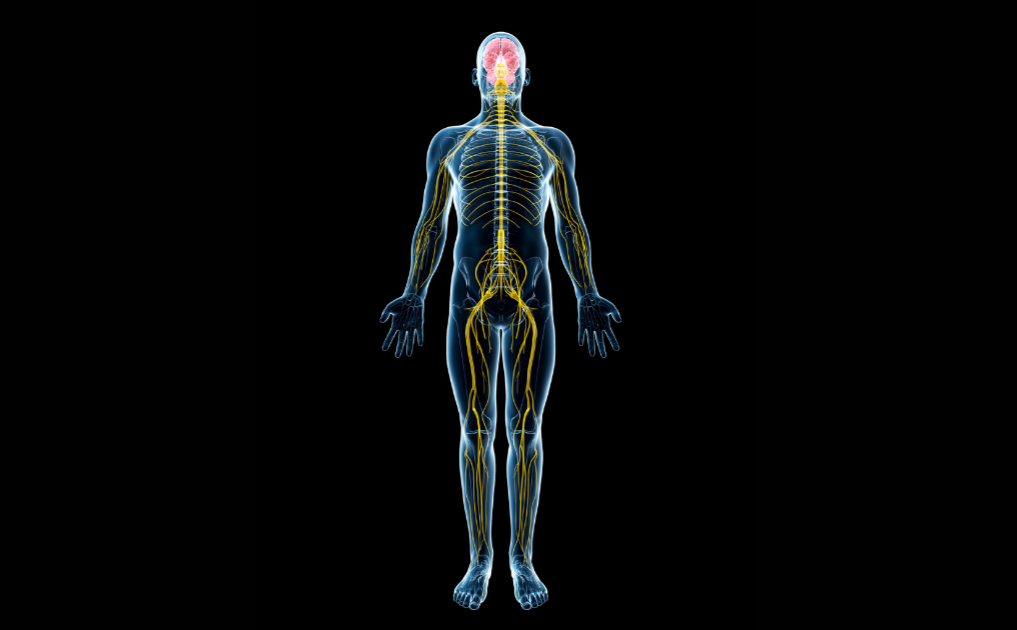
Get to the Source of Nerve Pain, Tingling and Numbness
A “pinched nerve” can feel like much more than a pinch.
Pain may travel down an arm or leg. Your fingers or toes may tingle. Part of your hand or foot may feel numb. Certain movements may suddenly trigger sharp or burning sensations.
At Re-LAX Chiropractic & Wellness, we provide comprehensive evaluation and personalized conservative care for patients experiencing symptoms that may be associated with nerve irritation or compression.
What Is a Pinched Nerve?
A pinched nerve is a common term used when surrounding structures place pressure on or irritate a nerve.
This can occur at different points in the body, but the neck and lower back are common locations because spinal nerves exit through these regions before traveling into the arms and legs.
Nerve symptoms may also originate outside the spine, so finding the location and potential cause of the irritation is essential.
Symptoms of Nerve Compression
Possible symptoms include:
- Sharp or radiating pain
- Burning pain
- Tingling
- Pins and needles
- Numbness
- Muscle weakness
- Pain traveling down an arm
- Pain traveling down a leg
- Hand or foot symptoms
- Symptoms that change with posture or movement
Nerves provide both sensation and motor function, which is why nerve problems can feel very different from ordinary muscle soreness.
What Causes a Pinched Nerve?
Potential causes include:
- Herniated or bulging discs
- Degenerative spinal changes
- Joint dysfunction
- Repetitive movement
- Injury
- Local inflammation
- Soft-tissue restrictions
- Certain narrowing around nerve pathways
The location of your symptoms doesn’t necessarily identify where the problem originates.
For example, tingling in a hand can sometimes relate to structures around the neck, shoulder, elbow or wrist.
A proper assessment helps distinguish among possible causes.
Our Approach to Pinched Nerve Treatment
At Re-LAX Chiropractic & Wellness, we begin by looking at your complete clinical picture.
That can include your symptom pattern, medical history, previous injuries, movement, posture and neuromusculoskeletal function.
When clinically appropriate, imaging or additional evaluation may be recommended.
Treatment is then based on what we find.
Potential components of conservative care may include chiropractic treatment, spinal decompression, soft-tissue techniques, movement recommendations and rehabilitative exercises.
Chiropractic Care for Nerve-Related Symptoms
When joint mechanics or spinal dysfunction are contributing factors, chiropractic care may be incorporated into your treatment plan.
The objective is not to “push a nerve back into place.”
Rather, chiropractic care addresses relevant joint and mechanical dysfunction based on your individual examination.
Spinal Decompression and Nerve Compression
When a nerve is affected by certain disc or spinal conditions, non-surgical spinal decompression may be considered.
Controlled traction gently decompresses targeted areas of the spine.
Whether decompression is appropriate depends on the source of your symptoms, your health history and examination findings.
Neck-Related Pinched Nerves
Nerve irritation in the cervical spine can create symptoms through the neck, shoulder, arm, hand or fingers.
You may notice that symptoms change when turning or tilting your head or after spending extended periods at a computer.
Because shoulder, elbow and wrist conditions can produce overlapping symptoms, determining the source is important.
Lower-Back Nerve Compression
Nerves leaving the lumbar spine travel into the lower body.
Irritation in this area can therefore produce pain, tingling or numbness in the buttock, leg or foot.
Sciatica is one common example of a nerve-related symptom pattern involving the lower body.
Why You Shouldn’t Ignore Persistent Numbness or Weakness
Pain gets attention quickly. Numbness can be easier to ignore.
Persistent or worsening neurological symptoms deserve evaluation because they may indicate ongoing nerve involvement.
Significant or rapidly progressive weakness and other serious neurological symptoms require prompt medical attention.
Pinched Nerve FAQs
Can a chiropractor treat a pinched nerve?
Chiropractic care may be one component of conservative management when musculoskeletal factors are contributing to nerve irritation. Treatment depends on the cause.
How do I know if I have a pinched nerve?
Radiating pain, tingling, numbness and weakness can suggest nerve involvement, but other conditions can cause similar symptoms. An evaluation is needed for diagnosis.
Can a pinched nerve cause hand numbness?
Yes, depending on which nerve is affected. However, hand numbness can have multiple causes.
Can a pinched nerve cause foot tingling?
Potentially. Nerves originating around the lower spine can produce symptoms into the leg and foot, although peripheral nerve conditions can also cause foot tingling.
Does spinal decompression help pinched nerves?
It may be appropriate when certain spinal or disc-related conditions are contributing to nerve compression.
Should I worry about muscle weakness?
New, significant or worsening weakness should be medically evaluated promptly.
Stop Guessing About Your Nerve Symptoms
If pain, tingling or numbness keeps returning, understanding where it comes from is an important first step.
Schedule Your $39 Consultation
Visit Re-LAX Chiropractic & Wellness in Los Angeles for a personalized assessment and learn which conservative options may be appropriate for your symptoms.
Call (424) 800-2488 or schedule your $39 consultation today.